On the surface, a UN investigation into war crimes in southern Ukraine might feel far from Fresno. The cities mentioned in the report are half a world away. The names are not immediately recognized: Kherson, Zaporizhzhia, Mykolaiv.
Yet, Americans already live with the legal and ethical consequences of gun violence when the law fails to prevent mass shootings. The findings released by the UN Independent International Commission of Inquiry on Ukraine in October 2025 raise questions that will resonate with Californians: What defines a safe community in the age of drones? How does the modern world respond when civilians are targeted? What happens when technology is used to make violence cheap and easily accessible?
The Commission’s new report is not only about Ukraine. It is also a warning about a new type of terrorism and warfare. Democratic societies and communities, including the United States and California, need to confront this reality.
A UN Mission with Global Consequences
The UN Independent Inquiry Commission’s mandate, set by the UN Human Rights Council, is to document violations of human rights and international humanitarian law in Russia’s invasion of Ukraine. Over the past three years, the Commission has carried out dozens of missions, interviewed hundreds of survivors and built one of the largest public evidence libraries in the history of UN field investigations.
This latest mission came to a disturbing conclusion: The Russian military is using small and inexpensive drones as weapons to terrorize civilians.
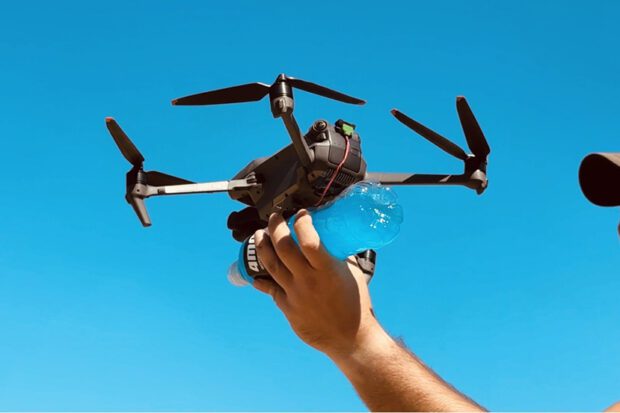
These are the same drones a person can purchase at Target for wedding photography or a school sports event. FPV (first-person view) drones differ from long-range, large drones that act as missiles. They fly slower, can circle a target and provide a live video feed to a pilot.
The drones used for what local residents now call “human safari” are more like flying cameras with weapons. They track a human being in real time and kill by dropping charges directly onto them.
The Commission found that Russian forces deployed this tactic across a 300-kilometer stretch of southern Ukraine, forcing thousands of civilians to flee. The attacks were not isolated. Investigators determined they were carried out under unified command and formed part of a state policy of the Russian Federation.
Relevance in the United States
The United States is already debating how to regulate drones in civilian airspace, how police and fire agencies should use them, and what safeguards are needed to prevent misuse. California is a leader in drone technology, from Silicon Valley start-ups to wildfire monitoring programs and film production.
The UN report shows how the same technology, in the hands of an authoritarian state or a terrorist, becomes a tool for population control or mass murder.
The drones Russia used fly low, often below radar. They hover over homes, fields and roads; film civilians with high-definition cameras; and drop explosives through rooftops. They wait for ambulances and strike first responders. This is the first war where drones are used en masse to hunt ordinary people.
In a state like California, where drones map orchards, track wildfires and deliver medical supplies, the question becomes urgent: Who controls this technology, and what happens when it is weaponized?
What the UN Actually Found
The core of the October 2025 UN report, stripped of legal terms and explained plainly, can be summed up as follows:
Russia used short-range drones to target civilians. The UN documented hundreds of cases along the Dnipro River in three Ukrainian regions. In many videos posted online, operators clearly saw they were striking civilians.
The attacks formed a coordinated campaign. These were not rogue operators. The Commission identified Russian drone units tied to the Dnepr Group of Forces under Colonel General Mikhail Teplinsky. Teplinsky reports to General Valery Gerasimov, Russia’s top military officer, who reports to Vladimir Putin, the president of the Russian Federation.
Californians might not know these names, but they might recognize the structure. It resembles systems used by states that deploy drones for surveillance or targeted strikes far from their own borders.
Civilians fled because life became impossible. The United Nations concluded that the attacks created a coercive environment that forced thousands to abandon their homes. In some areas, entire villages were displaced. The pattern amounted to the crime against humanity of forcible transfer.
Deportations were carried out in occupied areas. In addition to drone attacks, the Commission found that Russian authorities deported Ukrainian civilians from occupied parts of Zaporizhzhia. People were detained, interrogated, deprived of documents and pushed into Russia, Georgia or other territories. This was a state policy, and a Russian-installed regional governor even issued a decree authorizing expulsions.
Inside the Investigation
The Commission relied on 247 geolocated incidents, satellite imagery and interviews with 226 people, women and men in equal numbers. With limited access to frontline areas, investigators relied on remote-verified video, including footage Russian drone operators uploaded to Telegram channels.
Investigators identified exact launch sites, unit commanders, operators visible in videos and hierarchical reporting structures. They found drones launched from schools, clinics and homes in violation of international humanitarian law. Some launch points were traced to areas near the captured Zaporizhzhia Nuclear Power Plant.
The Commission concluded that these were not random acts but a deliberate campaign directed by the Russian state. The UN called for investigations, prosecutions, reparations and international cooperation to preserve and share evidence. The findings are intended to support national courts, universal jurisdiction cases in Europe and proceedings at the International Criminal Court.
Why This Matters in California
First, this is the future of warfare. California is directly involved as Silicon Valley manufactures advanced components used in drones worldwide. San Diego hosts major defense drone companies. The state is shaping how civilian drone systems and dual-use technologies are developed and exported.
Understanding how drones are weaponized against civilians is essential for ethical governance. The Russian war in Ukraine shows what happens when drone warfare becomes cheap, accessible and widespread.
Second, the same tactics can be used anywhere. Europe is already dealing with unidentified drones approaching critical sites. In October–November 2025, European governments reported unknown drones over nuclear plants in France and military facilities in Belgium, as well as repeated drone incursions over airports in Germany and the Netherlands. Drones can be launched from vessels.
California must take preventive steps to protect ports, energy infrastructure, agricultural regions and crowded urban centers. The vulnerabilities exposed in Ukraine are relevant to American homeland security.
Third, Californians understand displacement. Wildfires, floods and drought have forced many Californians to evacuate their homes. Testimonies from Ukrainians fleeing drone attacks echo the disorientation Californians feel during wildfires: rushed departure, uncertainty of return, and the destruction of homes and infrastructure. The difference is that in Ukraine, the destruction is intentional.
Deportation policy has also been a major public issue during the Trump administration, particularly around questions of due process and family separation. The UN report describes a displacement caused by deliberate design.
Why Care?
The war in Ukraine might feel geographically distant, but its implications are close. Technology developed in peaceful democracies can be turned into tools of terror. Attacks on civilians can now be carried out cheaply, anonymously, and remotely. Authoritarian states can deploy drones in ways that bypass traditional defenses. The laws and norms protecting civilians are being rewritten in real time.
For Americans, the question is whether the global system created after World War II to prevent states from targeting civilians still functions. The UN report suggests this system is now under strain.