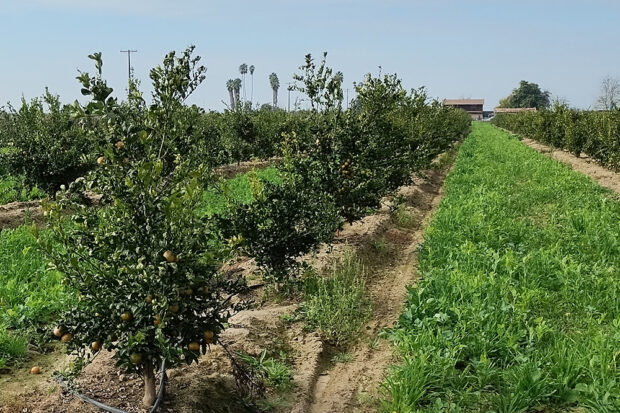
Community activism is forcing the City of Fresno to rethink its ambitious and controversial Southeast Development Area (SEDA) plan. The proposed development project of massive proportions would convert 9,000 acres of working farms and rural residences into a suburban landscape jammed with 45,000 houses interspersed with commercial malls and industrial parks. Not surprisingly, it has run into vehement organized opposition from many residents.
After simmering for years, the controversial SEDA plan has burst forth as a burning issue in recent months with the time for official decisions approaching. Opposition ramped up, as the City’s planning commission and then the City Council pondered the fate of SEDA.
The persistent and informed disapproval of the SEDA plan by community members forced Fresno Mayor Jerry Dyer to propose a much smaller project area, at least for now. The City’s fallback proposal is called South SEDA. It is a 1,547-acre area between Jensen and North avenues, and between Minnewawa and Temperance avenues. It is designated for research and development.
A second area of about 467 acres would be residential with up to 4,800 housing units.
Realizing that a 9,000-acre mega-sprawl development was not going to be publicly acceptable, the Fresno City Council decided with a 5-2 vote to have their planning staff study the South SEDA plan and come back with a revision that could be approved. Only Council Members Brandon Vang and Miguel Arias were skeptical enough of the project to oppose the proposal.
Planners, when they craft a revised plan, will have to answer nagging questions about the financial and environmental viability of the new plan. Opponents might have breathed a sigh of relief at having beat back the original plan, but some cautioned that South SEDA is a Trojan horse that once approved would inevitably open the door for the full-scale version of SEDA.
It has been a long and winding road for the opposition. In November, dozens of residents in a packed chamber at the Fresno Planning Commission voiced their antagonism to the project and the way it has been rolled out by City leaders.
“We, SEDA residents, want to protect our farmland, maintain our rural lifestyle, and we’re facing the potential cost of over a hundred thousand dollars to hook up to City water and sewer,” notes Al Cederquist. “How would you like that?
“The city residents here want Fresno to focus on fixing the problems within the city boundaries. Adding 9,000 acres creates more problems and stretches the budget thin.”
Cederquist said the project is not needed because the city already has room for more housing and commerce. Citing the 8,200 acres of infill property within the current city limits and the recently approved West Area Neighborhoods Specific Plan supporting the future development of up to 55,000 housing units and 60 million square feet of nonresidential building, he questioned why the 45,000 housing units in the SEDA plan are needed.
Cederquist was also critical of the planning assumptions contained in the development proposal. “SEDA is risky. There is a risk that the population estimates used for SEDA are wildly wrong.
“The 2024 California Department of Finance population statistics indicate California growth estimates are overstated by a factor of eight. Have you reviewed a risk analysis for California? If the state is right, then the City’s 2050 projection is wrong by 400,000 people.”
David Ramming lives and farms in the southeast area. He warned that the character of the region would be changed forever and impact the local economy.
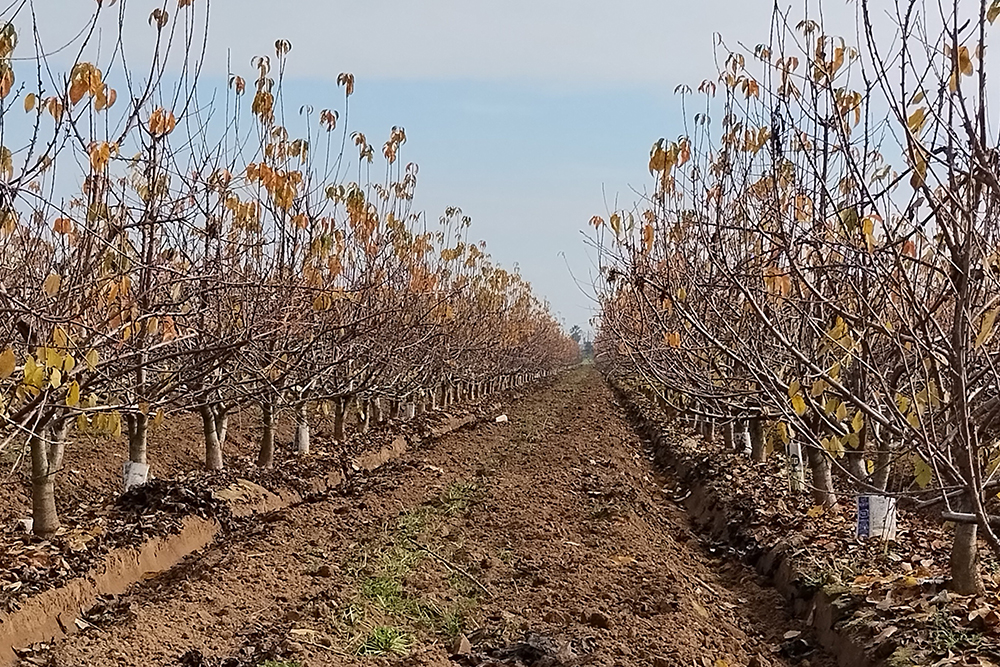
“One of the major faults of the SEDA plan is that it results in a loss of over 6,000 acres of prime farmland, some of the most productive farmland in the world,” says Ramming.
“This plan will take away the livelihood of many small family farmers and eliminate jobs connected with agriculture. Once the farmland is covered in housing, it will never be brought into production again.”
Dee Barnes, who worked for the Fresno Police Department, predicted that developer fees would not cover basic City services in the developed area.
“What the developer fees are not going to cover is the additional cost of the police officers’ cars and gasoline and the driving and the fire department, and the streetlights and the sidewalks and the streets.
“Count the number of vacant lots, empty boarded-up buildings. Look at the shopping centers where there’s nothing there. The stores that are closing.
“We need to fix Fresno. We need to fix the infill. We cannot afford to keep expanding.”
Danny Vartan was one of only two people at the Planning Commission meeting who spoke in favor of the project. His family owns land in the SEDA area, and he said the project would improve Fresno by stimulating population growth.
“This is probably the best plan that Fresno has ever developed. I think it would be a benefit for the whole city and a draw from other parts of the state to move to Fresno. And it’s only 12 minutes from downtown.”
Patience Milrod, a local attorney representing the Fresno-Madera-Kings-Tulare Central Labor Council, questioned the financial transparency and accountability of the SEDA plan.
“Where is the fiscal impact analysis? You are asking us to believe a whole lot of stuff that is by no means clear from any of the material that has been generated so far, including the financing options report, which shows that this is not a sustainable project.
“So where is the fiscal impact report that would give us some idea of what the real numbers actually are?”
The SEDA project is estimated to cost somewhere in the range of $3 billion–$4 billion that will have to be financed with bond measures. In other words, Fresno would borrow money to pay for the massive expansion with the city’s current residents footing the bill.
Matthew Jendian, a Fresno State sociology professor, focused on the winners and losers, saying that sprawl development would come at the expense of current city residents.
“Development doesn’t just happen. It follows public investment that provides infrastructure to allow that development to be feasible.
“Just because land speculators purchased land in this particular Southeast Development Area doesn’t mean that our city needs to cater to them and invest millions of public dollars to extend city infrastructure and services so these developers can cash in on those land bets they made eight years ago or 20 years ago.”
Despite the facts and widespread public antagonism toward SEDA, the Planning Commission narrowly voted 4-3 to approve the immense 9,000-acre project. That set the stage for the City Council’s consideration.
Again, people from all walks of life and all over town packed the City Council chamber. After some comments and questions for planning staff from Council members, the mayor outlined the SEDA proposal.
Cognizant of the many problems that the public has with the South SEDA plan, Dyer presented some guardrails of accountability that would make it more palatable.
“In order to alleviate those concerns about urban sprawl, leapfrog development or developing outside of this initial phase, I am recommending to this Council that ironclad safeguards be put in place to address those concerns.
“Safeguards such as No. 1, 70% of the residential land must be developed before any future phases would be permitted in that sphere.
“No. 2, that we would require a supplemental environmental impact report for any future phases in the sphere.
“And No. 3, to require a voter referendum prior to any future phases being developed.
“In short, let the voters decide if there is a desire to go beyond the initial South SEDA area.”
People in the overflow crowd were mostly skeptical of the City’s planning process and wanted to see an accurate financial analysis and proof that the City’s analysis of water use and air quality impacts were factual.
Michael Matthew, a current resident in the SEDA region, was critical of the representations by City staff.
“I’m being told by City staff that traffic and vehicle miles traveled is being mitigated and the claims of Caltrans are unfounded. Yet, I could stand on the north border of my lot and see traffic on McKinley Avenue back up to its standstill every day, one-half mile from De Wolf Avenue to Leonard Avenue, as parents pick up their kids from the Bradley Center.
“I’m also told that [the] California Air Resources Board has no reason to worry about any air pollution planning. Staff says [that] we have plenty of water, yet I watched three neighbors within one-third of a mile of my place [have] wells go dry within the last three years.”
Matthew also brought up issues that resonated with other critics of SEDA. “The budget started at $800 million and now the estimate is $4.3 billion. How can anyone suggest that this project pays for itself with a $3 billion shortfall?
“After 20 years, no one seems to be able to tell me the size or exactly where the trail will be located that splits my property in half. I just can’t accept any plan that at its core would compromise the food and water supply to the community that I’ve lived in for 77 years.
“The substance, fit and timing is wrong, and there’s nothing worth salvaging here. Scrap this plan today. Concentrate on infill and ample space that has already been set aside for development.”
Dan O’Connell, an expert on Valley agriculture, enumerated a series of environmental concerns that City planners have not addressed: “farmland preservation, greenhouse gas emissions, human health effects, water supply concerns, environmental justice exclusions, lack of affordable housing assurances and insufficient analysis of vehicle miles traveled, General Plan inconsistencies and procedural violations.”
Fresno schools would also be profoundly impacted according to Veva Islas, Board president of the Fresno Unified School District. “If SEDA is allowed to go forward, numerous negative impacts will arise for Fresno Unified schools and neighborhoods within Fresno Unified boundaries.
“So, whether the impact is 11 schools in the future or five schools today, the results are the same. There is a detriment to our schools, our students and our teachers.”
Manuel Bonilla, speaking as a parent of three Fresno students and president of the Fresno Teachers Association, backed up the risk the development plan poses for the city’s schools.
“SEDA would effectively subsidize growth primarily that would benefit Clovis Unified and Sanger Unified and [be] an indirect expense to Fresno Unified students.
“That’s not theoretical. That is the structural consequence of decisions like this.”
Dillon Savory, executive director of the Central Labor Council, called into question the information City Council members are using to justify SEDA. “I really want you all to question where you’re getting your facts from on this particular issue.
“We met with your City staff, and while the mayor wanted to agree to a lot of things, the city manager and the planning director continued to correct him that that was not legal or he couldn’t really do that. You can get more facts outside of your City staff.
“Please do your independent research, and note that the information you’re getting from inside the building is often jaded.”
Now the City’s planning staff has the task of coming up with a proposal for the scaled-back version of SEDA. That is expected to take about six months. Their analysis and due diligence will be sorely tested by a well-informed and questioning community.