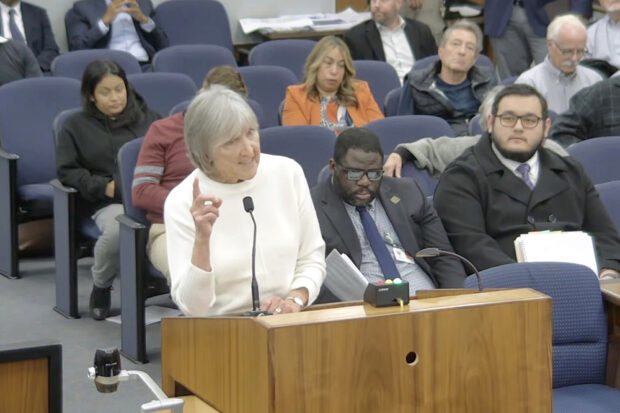
On Dec. 9, the last Fresno County Board of Supervisors meeting of 2025, staff presented an update on Measure C renewal negotiations, also covering what would be required to advance a potential alternative, citizen-led initiative, should it come to that. The meeting revealed a bleak contrast: District 2 Supervisor Garry Bredefeld’s intractable refusal to engage respectfully or seek consensus, and everyone else’s cooperative, pragmatic willingness to collaborate.
Measure C, a countywide half-cent sales tax first approved by voters in 1986, funds local transportation projects such as road repairs, public transit, bicycle lanes and the like. It must be reapproved by voters every 20 years (a new proposal would increase the term to 30 years).
The current measure expires in 2027; hence, plans are under way for a renewal to continue the funding of essential transportation infrastructure projects. The revised measure will be on the ballot in November 2026.
Managed by the Fresno County Transportation Authority (FCTA), Measure C has generated billions of dollars to the County for road and highway maintenance and upgrades, as well as for the expansion of public transit.
Current negotiators have focused on how much to allocate to each transportation category; some support funding exclusively for routine road repair, whereas others prefer a balance among road repairs, public transportation and other transportation needs and considerations, with a view to planning over the next three decades.
Community input has been solicited to better determine how the next expenditure plan would best be allocated.
Negotiations have been ongoing over the past year between the Fresno Council of Governments (COG) and the Measure C Steering Committee, which includes a citizens’ advocacy group, Transportation for All (TFA).
TFA’s inclusion reflects an explicit attempt to bring community-based organizations (especially social justice/environmental/equity-oriented groups) into the core planning and decision process to ensure the renewed Measure C addresses broader priorities, such as transit equity, rather than roads-only and car-centric infrastructure, an approach that has delighted many but made others, such as Bredefeld and District 4 Supervisor Buddy Mendes (Bredefeld serves on the FCTA and COG boards, Mendes is chair of the FCTA), furious.
Bredefeld, in particular, has expressed a vitriolic, ideological contempt for anything other than plain pothole repair.
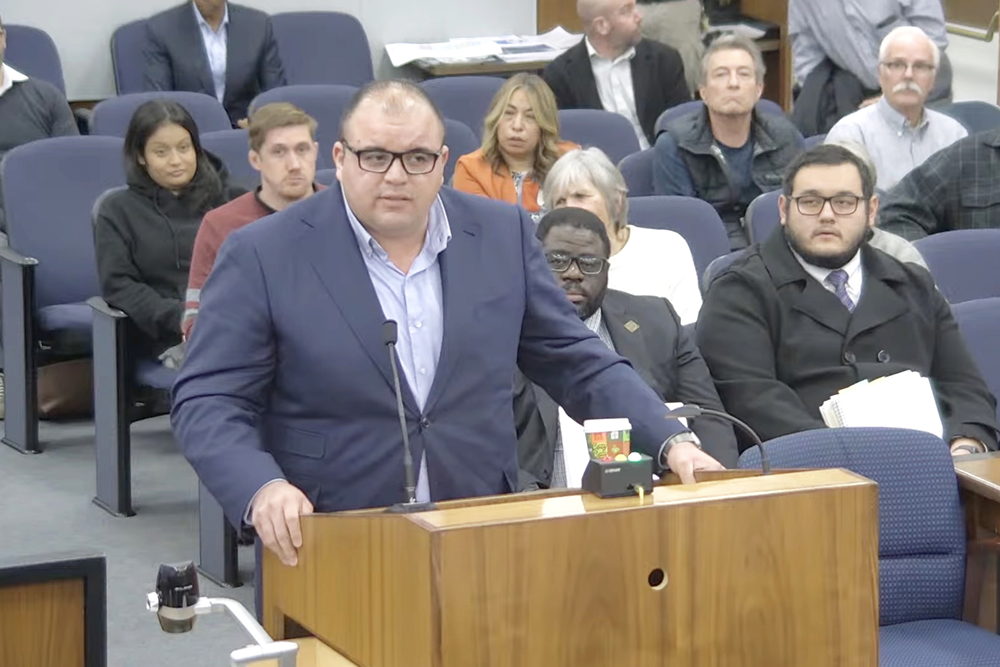
At the Dec. 9 meeting, Mohammad Alimi of the Department of Public Works summarized the negotiating parties’ proposed allocation plan, which was decisively approved on Nov. 20. In a nutshell, it accounts for 65% of the tax revenue to be spent on road repair, 25% on public transportation, 5% for regional connectivity, 4% for innovation and 1% for administration.
A 2022 attempt to renew the measure early had allocated about 70% to road repair, 15% to regional projects and 10% to public transit and was rejected by voters; so, spending formulas that reflect voter preferences are critical and add to the urgency as the clock ticks toward Election Day.
Intensifying the drama, Bredefeld has repeatedly warned that he would not support anything other than 85% for road repair. At the Board’s Nov. 18 meeting, he had complained bitterly that the mayors on the Steering Committee had “punted to unelected radicals” (meaning TFA) who “believe in climate change,” something he regards as beyond the pale.
He derided the steering committee for wanting to “spend on public transit and bike lanes” and railed that “people don’t want it!”
He claimed that no one wanted anything but getting potholes fixed, that 65% spent on roads “is not really roads, it’s bike lanes,” and snarled that “COG abdicated to left-wing radicals! It’s a shit-show, a complete shit-show…left-wing lunatics…I won’t be a part of a shit-show, I’ll make sure it fails!”
Bredefeld persisted in this obdurate, emotionally fixated manner at the Dec. 9 meeting, recycling the same threats, word for word.
A lot is at stake, because if the measure fails in the November 2026 election, there will be no money to fund anything transportation-related. Critically, the final step before the measure can appear on the ballot is approval by the Board of Supervisors, so it is possible that the three MAGA Republicans on the Board will reject the negotiated measure when it reaches them for approval.
Discussion followed Alimi’s presentation. Predictably, Bredefeld ranted about what he was sure was a diabolical “agenda to get people out of their cars.”
He bellowed that “no one rides public transit,” that “no one rides bikes” and repeated that the steering committee “allowed the process to be hijacked by radicals!”
He huffed and puffed that he would “not allow this to be hijacked, the radicals could care less!” and, if anyone doubted that he had said it before, again threatened, “I’m gonna make sure this fails!”
He angrily reprised his characterization of the steering committee meeting as a “shit-show,” compulsively repeating the phrase multiple times.
Aside from Bredefeld, Chair Mendes is openly hostile to both negotiating-team colleagues and to the current proposal, and District 5 Supervisor Nathan Magsig, though he has expressed willingness to work toward a compromise, is no less against it.
District 3 Supervisor Luis Chavez asked County Clerk/Registrar of Voters James Kus, who was present, to address what it would take for a citizens’ initiative to appear on the ballot. Presumably, if the Board rejects the negotiated measure and replaces it with something aligning with the views of the three MAGA Republican supervisors, the negotiated measure could appear on the ballot as well, as a citizens’ initiative—resulting in two competing measures for voters to choose from.
Kus explained that the timeline for a citizens’ initiative process is tight—a petition must be circulated and at least 22,000 signatures would be required. Those signatures would have to be vetted, and the deadline for all of that would be mid-July. The Board would assume a ministerial role to pass the initiative on to Kus, and if they refused to do it, a court order would be required.
District 1 Supervisor Brian Pacheco said he “hoped we can work it out” to avoid what would be “an ugly mess.”
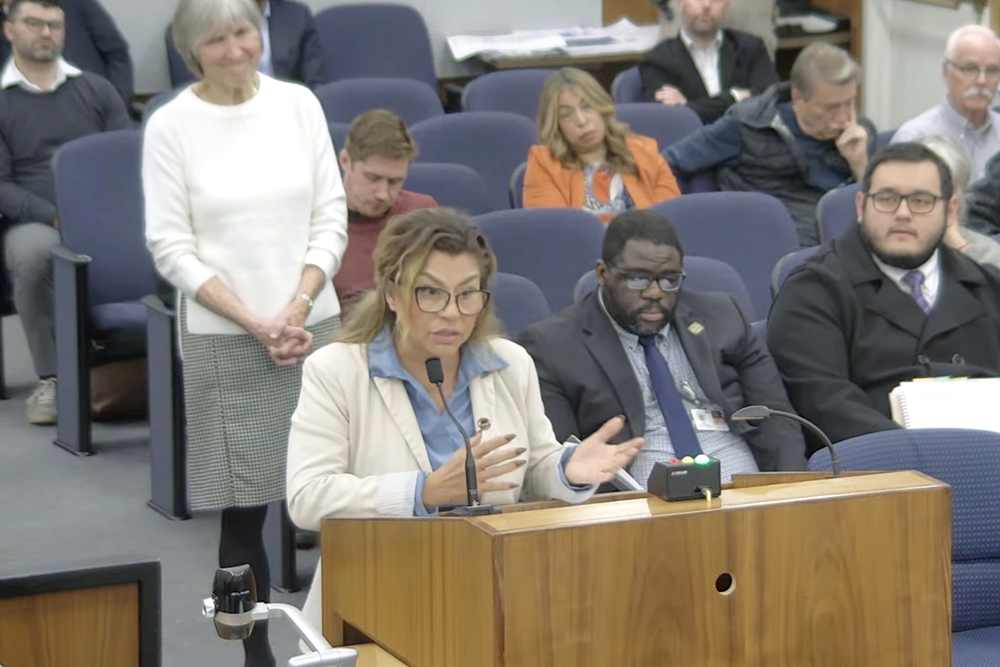
Magsig’s remarks were made in calm and measured tones, but he appeared to be essentially agreeing with the bullying and intimidating Bredefeld. For example, prefacing his objection to the allocation for public transit by claiming that he has “no issue” with it, Magsig tried to make the case that current ridership doesn’t justify investing in it, but he didn’t account for the reality that, as a member of the public later pointed out, low ridership reflected inadequate service resulting from a lack of investment. Alimi himself noted that there is public demand for expansion of public transit.
Mendes, a foe of public transit, said that the original measure had allocated nothing for transit and that only in the second iteration of Measure C, funding for transit was “tooken [sic] off the top.”
Mendes repeated a charge he made previously, that “secret negotiations” had been held, excluding him and others. Later, during public comment, Parlier Mayor Alma Beltran responded to Mendes, reminding him that he had explicitly refused, in writing, to participate in the negotiations in question.
Chavez, summarizing, said he had not observed a “shit-show” but rather saw groups working together to reach a “happy medium.” He emphasized that if agreement could not be reached, it was important to know what was entailed if “mom and dad ended up in divorce court” and two separate measures were proposed.
Nevertheless, he was optimistic and quipped that he hoped the slur “radical” wielded by Bredefeld would be downgraded to “advocate.” This was, after all, an opportunity to create policy to serve the County over the next few decades, he said.
Mendes asked a reasonable question—did any of his colleagues approve of the measure as it was currently written? Chavez liked some of it, didn’t like other bits, but saw a chance to reach consensus. Pacheco agreed with Chavez and nitpicked over cities getting higher allocations than the County; he felt there was time to “work it out a little bit” or “get nothing.”
Chavez emphasized that “the conversation” should continue. Magsig found the reduction in allocation for regional projects a “fatal flaw” but agreed with Pacheco that if the measure failed, the results would be devastating.
Mendes tried to go to the next agenda item without allowing public comment, but there were objections. First, Mendota Mayor and COG Vice Chair Victor Martinez said he was in support of the current proposal, which will help cities like his “catch up” after 20 years of under-investment.
Parlier Mayor Beltran said that it was critical to reach agreement, and when she countered Mendes’ assertion that she and others had met “in secret,” Mendes interrupted and angrily shouted incoherently at her.
Beltran admonished him that “we need to come together instead of arguing,” and that if there are two ballot measures, they will both fail.
Addressing Bredefeld, she said that “calling us ‘radicals,’ is not right.” She continued, “Why would anyone say that this is a ‘shit-show’ and that we are ‘radicals’?”
“We are trying to do what’s right, bring unity, and focus on our [neglected] rural communities,” concluded Beltran.
Bredefeld, clearly agitated, made free to insult Beltran by telling her that he was “not calling you a radical,” he was calling TFA, the group “she allowed to hijack” the process, “radicals.”
Last to speak was Kay Bertken from the League of Women Voters of Fresno: “I’m one of the ‘radicals’ on the steering committee,” she joked, noting that there was broad public support for the proposed plan and a 93% vote of the Steering Committee in support of it.
Regarding the 25% allocation for public transit, that figure represents residents’ polling results, she said. Over a 30-year plan, “people want a community that is not without options to the individual vehicle,” she noted.
The coming weeks will determine whether Bredefeld’s histrionic obstruction will nullify constituent-supported priorities.