An educational crisis is spreading quietly across Fresno County, and it begins long before high school. The latest 2024–2025 CAASPP (California Assessment of Student Performance and Progress) results for middle schools reveal a disturbing truth: Our students are falling far behind in both English and math—and few are paying attention.
Across the county’s 37 middle schools, only a handful of campuses show students performing at or above grade level. At the top are schools like Computech Middle (85.75% in English, 67.74% in math), Granite Ridge Intermediate (83.52%, 67.51%) and Alta Sierra Intermediate (79.01%, 60.09%). These are success stories—models of what’s possible when schools set high expectations, invest in teacher development and create a culture of achievement.
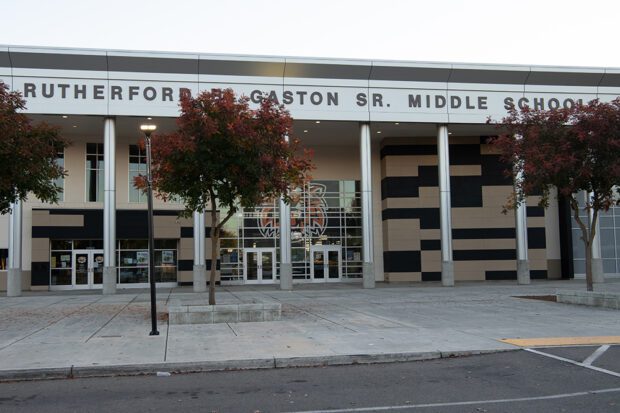
But the rest of the story is grim. Schools across rural and low-income communities are performing at crisis levels. Huron Middle School (13.76% English, 9.34% math), Gaston Middle (13.48%, 7.73%), Parlier Junior High (20%, 6.31%) and Firebaugh Middle (27.42%, 15.23%) show proficiency rates so low that most students are entering high school already academically defeated.
Even in cities with greater resources, the picture is bleak. Kerman Middle (33.76% English, 22.26% math), Mendota Junior High (41.27%, 18.60%) and Coalinga Middle (21.12%, 10.92%) show that nearly three-quarters of their students lack foundational skills in reading, writing and arithmetic.
When students are failing at these rates, it’s not an individual problem—it’s a system failure. These scores show that the achievement gap begins years before high school and widens with every grade.
By the time students reach ninth grade, many are already two to three years behind. That means high school math and English teachers are expected to perform miracles in just four years—with students who were never given a fair chance to begin with.
This is not about blaming teachers. Most educators are doing extraordinary work under challenging conditions. The issue is a lack of system-wide urgency and accountability.
When less than one-quarter of students are proficient, where are the press conferences? Where are the public forums? Where are the school boards demanding an action plan?
Too often, low performance in rural schools is accepted as inevitable—“that’s just the way it is.” But that mindset is destroying futures.
Our children in Firebaugh, Mendota, San Joaquin, Huron and Kerman are every bit as capable as students in Clovis or north Fresno. The difference isn’t intelligence—it’s opportunity, expectation and consistent instructional leadership.
When our middle schools fail, the entire region pays the price. The Central Valley’s future economy relies on preparing workers for jobs in agtech, clean energy, health sciences and logistics. None of that will be possible if our public schools continue graduating students who struggle with basic math and literacy.
Without math, we cannot produce doctors, scientists, engineers and innovators in our rural schools. We are closing doors before our students even have a chance to open them.
Businesses will not invest in communities where the majority of young people cannot compete academically. And those who do succeed will often leave for better opportunities elsewhere, deepening the region’s brain drain and weakening the local economy.
If Fresno County is serious about change, it must start by confronting reality. That means transparent data reporting, clear accountability for results and targeted investment where the needs are greatest.
Leadership matters. District superintendents and principals must set measurable goals, track progress and celebrate schools that improve—not just those that maintain.
Teachers need support, not blame. Intensive coaching in math instruction, data-driven teaching strategies and smaller class sizes in struggling schools can change outcomes.
Parents must be empowered and informed about what proficiency really means so they can advocate for their children and demand better from local leaders. Families deserve clear explanations of test results, not just report cards filled with confusing abbreviations. When parents understand the data, they become powerful allies for change.
Community partnerships must also play a central role. Higher-education institutions, nonprofits and civic organizations can help bridge the gap between schools and real-world opportunities for students.
The middle-school years are the critical bridge between childhood and the challenges of high school. They are the years when students either discover confidence in their learning or internalize failure as their destiny.
The 2024–2025 CAASPP results tell us that far too many are walking the latter path. We cannot afford another year of silence or complacency. Every data point represents a child—a life, a potential engineer, teacher, nurse or community leader whose dreams are being deferred by a broken system.
Fresno County’s middle schools are sending a message, and the question is: Will anyone listen?