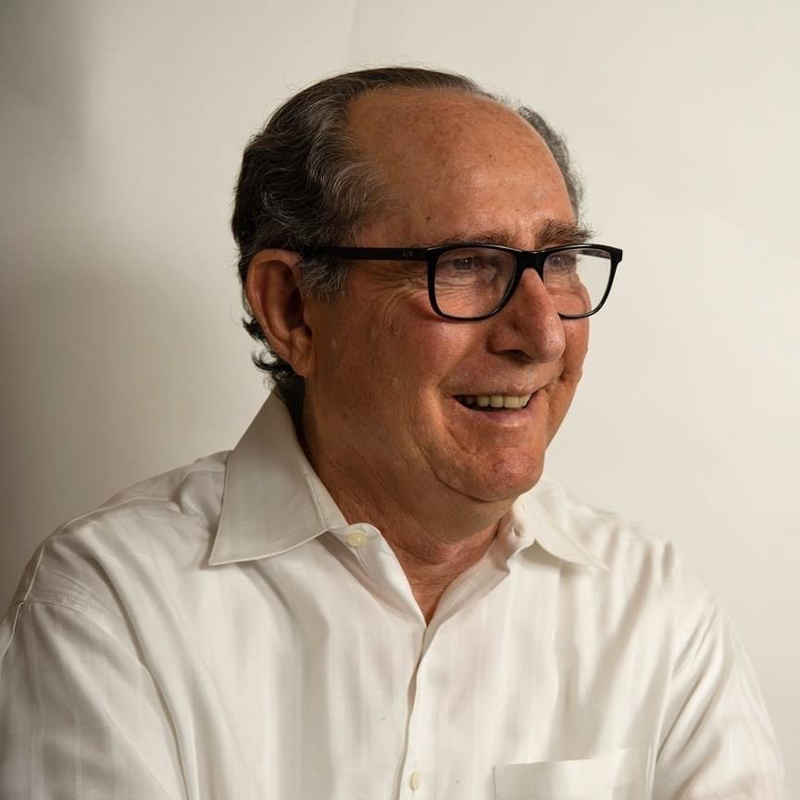
Randy Villegas is better educated than the average congressional candidate. He has a PhD in Politics with an emphasis on Latin American and Latino Studies from the University of California Santa Cruz.
He teaches at the Tulare and Hanford campuses of College of the Sequoias and stays busy working at his car repair shop, a small business he owns in Bakersfield.
Villegas, who is 31 years old, is of the first generation in his family to go to college. His parents, who did not finish high school, are preparing for the GED exam.
Talking with a couple of volunteers in his new Bakersfield office, Villegas said his parents wanted to go out to an event the previous week, but he told them, “No, you should stay home and do your schoolwork!”
“I flipped the script,” he said, smiling.
A Progressive Campaign
Villegas is running an innovative campaign for Congress in District 22, which was redrawn by Proposition 50, making it more likely to go to a Democratic candidate. It includes areas of Kern, Kings, Tulare, Madera and Fresno counties. His office was a hive of activity when it opened on September 11.
His opponent, incumbent Republican David Valadao, has returned to office several times. Valadao is of Portuguese background and comes from a family of dairy farmers.
In June, Villegas beat Jasmeet Bains, a more conservative Democratic Primary challenger.
His campaign has received national attention, as it is considered key to a Democratic re-taking of the House. He has been endorsed by Bernie Sanders and Alexandria Ocasio-Cortez.
Latino Voters Distancing Themselves from Republican Party
An Associated Press-NORC poll says between March of 2025 and July of 2026 Latino support for Trump nationwide dropped 18% compared to 9% among other groups.
AP-NORC reported that as of early September, Villegas is ahead of Valadao by four percentage points.

However, he isn’t letting the early successes go to his head. “I tell folks I’m always running like we’re 15 to 20 points down and I need to work twice as hard because we can’t take anything for granted in this race or in this district,” he said in an interview.
“I’m grateful for the support that we have seen and the fact that we overcame so much in the primary, even having to beat the establishment within our own party.”
Villegas advertises he does not take corporate money; he depends on small dollar donations from supporters. His campaign volunteers go door to door and are “people who are willing to sacrifice their sweat and their sunscreen and triple digit heat for a campaign and a vision and a platform to believe in.”
“I call myself a populist,” Villegas said, “because the campaign that we are running and the ideas that we are running are really popular across the political spectrum.
“I’ve talked to Republicans at the doors who agree with me that we shouldn’t be spending roughly a billion dollars a day on this war in Iran that nobody asked for, who agree that we should ban members of Congress from trading stocks and we should ban private equity from buying single family homes.
“And I think that’s why we have the support of not just Democrats and progressives, we have the endorsement of a local Republican mayor, which I think says a lot about this fight not being about left versus right or an ideological fight.
“It’s really ‘us versus them.’ [We are] working families in the Central Valley who’ve been left behind by politicians in both parties who would rather cater to corporate interests and billionaires.”
One of the biggest differences between the Villegas and Valadao campaigns is that Villegas’ messaging tackles real issues. For example, on his website, Villegasforcongress.com, he stakes out clear positions on areas from cost of living to immigration to artificial intelligence.
As a MAGA Republican, Valadao’s campaign has had to be more opaque (ValadaoforCongress.com). Villegas invited Valadao to debates in the Fresno and Bakersfield media, as well as in Spanish local media, and Valadao did not respond. Then on September 21 Villegas posted on Instagram that Valadao finally decided to debate him on Bakersfield’s KGET on October 6.
Hot Button Issues: Flock and Data Centers
Villegas offered his opinions about two hot-button tech issues in the Central Valley: the installation of Flock surveillance cameras on the streets and the building of data centers.
“I am opposed to Flock,” he said. “I think [their system] is a violation of our civil liberties. I have a lot of concerns about where this data is being stored and who has access to it, whether it be government agencies or individuals who are using this data for nefarious purposes. I believe strongly in our civil liberties and we have the right to privacy laid out in our constitution.”
In response to his thoughts on the possibility of data centers being built in the Central Valley, he said, ”We can have strong guardrails when it comes to data centers. We can ensure that any increase in terms of electricity or utilities is paid for by big tech and not passed on to our working families here in the Central Valley.
“We need to ensure that there are actual regulations in terms of potable water that’s used for these data centers. I mean, we have communities here in the Central Valley that don’t have access to safe, affordable and clean drinking water.
“There are a lot of good union jobs for our brothers and sisters in the trades when it comes to data centers, but people in the Central Valley should be able to make the decisions, not billionaires in Silicon Valley or ‘data center David,’ who continues to stay silent on these issues.”
It All Comes Down to November 3
Valadao voted in favor of the “Big, Beautiful Bill,” which stripped $880 billion in funding for Medicaid (known as Medi-Cal in California), in order to put into place tax cuts for the oligarchy.
The AP reported that Democrats estimate 57,000 constituents in District 22 will stand to lose their medical coverage when the bill goes into effect later this year. Few other areas of the country would be so impacted. Valadao only said to the AP that this projection is “overstated.”
Villegas said if and when the Democrats take back the House and Senate, the cuts to Medicaid could be reversed. That spells a clear advantage to the Villegas campaign among voters in his district. It all comes down to the results on November 3.