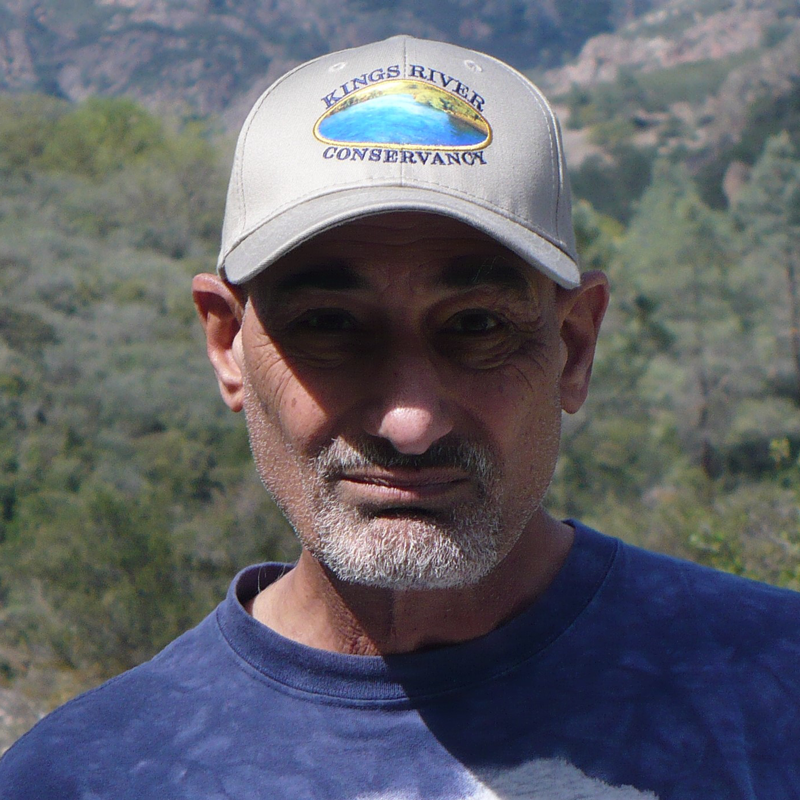
“The work that we do here is mutual aid and rapid response.” —Mark Godfree
“Seeing grown men weeping hard is overwhelming. But seeing young boys, to see them coming out, they could be my nephews, they could be my grandchildren.” —Monica Butterfly
Nearly every day, four or five volunteers show up at the Immigration and Customs Enforcement (ICE) office in Fresno to give aid and assistance to immigrants who are released from detention onto L Street. For some, it is the only help available to people who find themselves in a strange place with little or no resources. If they are lucky, they will be greeted by a volunteer with a helping hand.
The Fresno headquarters of ICE is a large, gray brick building downtown. Human beings from the world over are processed here. Some are summoned and show up voluntarily. Others are brought here in white vans and swallowed into the imposing structure. After questioning by immigration officials, they either end up in a detention camp or back on the street. That’s where Mark Godfree and Monica Butterfly come in. They’re here six mornings a week to provide help for those who are released and are trying to find their way back home.
Mark and Monica are part of a small crew of locals dedicated to providing some comfort and practical assistance to immigrants who find themselves on the street in a strange place. A complete unknown with no direction home, as the song goes. Most are traumatized by what they’ve experienced. During this particular outreach effort, they share the street with a vigil sponsored by Faith in the Valley, whose members offer prayers and bear witness to the suffering of fellow humans.
Mark describes what happens when they encounter immigrants as they leave the ICE building. He’s wearing a T-shirt emblazoned with the message “We Are Here to Help” in numerous languages. “The first thing we do is, is we greet them and try to get them to recognize us as friendlies, right? That we’re here to help. And that’s, this shirt is part of that. And then we try to determine what language they speak so we know who in our group… And basically, we’re only really equipped to handle English and Spanish.” He adds that they meet people speaking many other languages whom they try their best to assist.
ICE releases people into the city with a few belongings in the kind of red plastic net bag you might get at a market holding onions or oranges. Volunteers like Mark and Monica offer them backpacks filled with some clothing and personal care items. It’s an out-of-pocket contribution by those doing the work. One of the ways they provide aid is the Backpack Project. Monica says it helps restore a measure of dignity.
“That project was started by another couple escorting one of the men back to his family,” Monica explains. “They met halfway between here and Los Angeles. And she was very troubled when he got off to see his wife and children to be dressed in that fashion and carrying that red bag. And she just was so distraught. And she says, ‘We’ve stripped them of all their dignity. What can we do to give that back?’”
Clean clothing and decent shoes are an important part of the provisions that immigrants are given. Mark gestures to a nearby thrift store where people are taken to get regular street clothes. “Because they come out in the grays and basically they look like someone who’s been in jail. So, we offer them a change of clothing, which helps them begin to feel a little more human. They’re dressed normally like a regular human being. And it’s clean because they smell when they come out, because they (ICE) don’t give them a lot of showers. And occasionally some of them will come in for a check-in and they won’t come out. And of those people, I would say 100% are deported.”
Mark points out that individuals ICE puts on the street have another critical need: a way to contact family and friends and navigate their way home. “Communication. We can let them call their family using our cell phones. And we also have an agency in town that’s buying cell phones for us.” Volunteers also provide transportation to places where released detainees can meet with their family, or to the airport, train station or bus depot. If needed, they buy the individual a ticket for travel.
The ICE office has no set schedule and releases detainees at any time of day or night. So there are times when nobody is there to offer help and guidance. Monica worries that a lot of released immigrants in need of assistance are falling through the cracks.
“Because we’re such a small group of volunteers and we direly need people to help, especially those with a multiple language skill set. We’re only here in the morning because if it gets too hot, even we can’t tolerate the heat. Or we’re exhausted, right? So, we go home by 11, 12, 1 o’clock and we’re done for the day. We don’t have enough people to be able to be here from 3 to 5 p.m.”
Mark says they rarely interact with ICE officials. But he says that one immigration officer indicated he disagreed with the policy of random releases and wished to coordinate the timing of releases so that volunteers could be there at the right times to help people. There are other signs that the Trump administration’s policy of inflicting intentional cruelty on those who have been captured is not embraced by all the people working in the system.
“When I’ve talked to the transportation guards, who are contractors, not ICE. They’re very clear. They want you to know the job is just to move people.” Mark relates how one of the transportation guards distanced himself from the abusive actions of some ICE officers. “You know, all of that cruelty and stuff, that’s not me. That’s ICE. I want you to know that I do some paperwork and I bring them here and take them back, and that’s my involvement.”
Monica describes the daily scene of chaos in front of the ICE headquarters. Signup tables for those summoned for an interview are set up on the sidewalk. There’s no shade to blunt the often triple-digit heat, no cover should it rain, no chairs for the infirm and not nearly enough room.
“These people are crowded 30, 40 in a line waiting for their names to be called. You see the, the sidewalk is not that wide. So where do they go? They spill onto the road. So, why isn’t the city intervening is my question. Why isn’t the county, the Department of Health? This is a public health hazard, a public health issue.”
Neither the city of Fresno nor the county has offered any help, and both have a policy of not interfering with federal government operations. That leaves the task of caring for those caught up in the brutal deportation system to people like Mark Godfree, Monica Butterfly and their colleagues. Their service to humanity may be little noticed, but it will be long remembered by those they have helped.